What Is CO2 in Paintball?
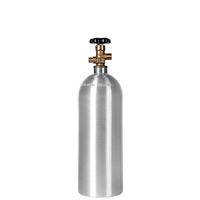
CO2 (carbon dioxide) has been used in paintball since the early days of the sport. It’s stored as a liquid that expands into gas when fired through the marker. Originally, the markers were powered by small, disposable 12 gram cartridges, but over time, larger bulk tanks such as 20oz tanks took over the market.
Advantages of CO2
Lower upfront cost for tanks
Widely available at older fields and pro shops
Works well in mechanical and older paintball markers
Performs decently in warm weather
Disadvantages of CO2
Pressure fluctuates as temperature changes
Liquid CO2 can enter the marker, causing inconsistent shots
Can damage seals, O-rings, and internals over time
Poor cold-weather performance
Not all fields and shops fill CO2
Not compatible with many modern electronic markers
CO2 typically operates around 800–900 PSI, but that pressure can spike or drop depending on conditions — which is not ideal for precision play.
What Is Compressed Air (HPA)?
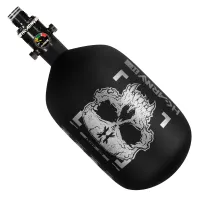
Compressed air, also called HPA (High Pressure Air) or nitrogen, stores air as a compressed gas only, not a liquid. It uses a built-in regulator to deliver consistent pressure to your marker. There are a couple of major types of HPA tanks, and they're defined by the material they're made of and how much pressure they can be filled to. Aluminum tanks, such as the Tippmann 48ci/ 3000 psi are less expensive, but they are heavier and hold less useable air than a carbon fiber tank, like the Empire 68ci/ 4500.
Advantages of Compressed Air
Extremely consistent pressure
Improved accuracy and shot-to-shot consistency
Safe for electronic, pneumatic, and tournament-level markers
Reliable in hot and cold weather
Cleaner operation with less internal wear
Disadvantages of Compressed Air
Higher initial cost than CO2
Tanks require hydro testing every 5 years
Requires a fill station or paintball store or field with HPA capability
Most HPA tanks are rated at 3000 PSI or 4500 PSI, offering significantly more shots per fill than CO2.
Which Air System Is Best for Paintball?
Choose CO2 If:
You’re running an older mechanical marker
You play casually and want the lowest cost option
Your local field still supports CO2 fills
You mainly play in warm weather
Choose Compressed Air If:
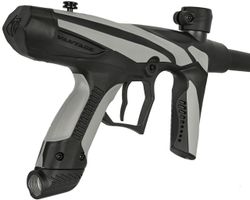
You use an electronic or modern paintball marker
You want maximum consistency and accuracy
You play speedball, tournaments, or scenario games
You want long-term reliability and better performance
For most players today, compressed air is the clear winner. Nearly all modern paintball markers are designed specifically for HPA and may not function safely with CO2 at all.
Final Thoughts: CO2 or Compressed Air?
While CO2 played a major role in paintball’s history, compressed air has become the modern standard. The improved consistency, safety, and marker compatibility make HPA the preferred choice for beginners and experienced players alike.
If you’re upgrading your paintball setup or buying your first tank, choosing compressed air will future-proof your gear and elevate your performance on the field.